Lake Placid – Most everyone runs away from fires. Matt Vincent, however, runs toward them.
A Mirror Lake Inn employee for 22 years, and a volunteer fireman in the Upper Jay (N.Y.) Volunteer Fire Department, Vincent, on the left in the cover photo, is among a select number of firefighters who signs up for duty fighting wildfires in the U.S. west. That’s right – he looks forward to it and relishes each opportunity. He’s not alone, of course. Despite attacking in the air and on the ground, local fire crews are simply overmatched trying to put down these blazes. The willingness to assist comes to them from around the nation, creating all-star teams of firefighters.
“The appeal is being able to help,” said Matt in late August, between stints in the west. “That’s what it comes down to. I get to travel and help others.”
Going back to 2006 when he battled problems on Red Mountain in Idaho, Vincent, who works in the hotel’s maintenance department, has teamed up with New York State Forest Rangers under the banner of the Department of Environmental Conservation. Most recently, he’s been an engine boss with independent Wolf Rock Wildland Fire in New Hampshire.
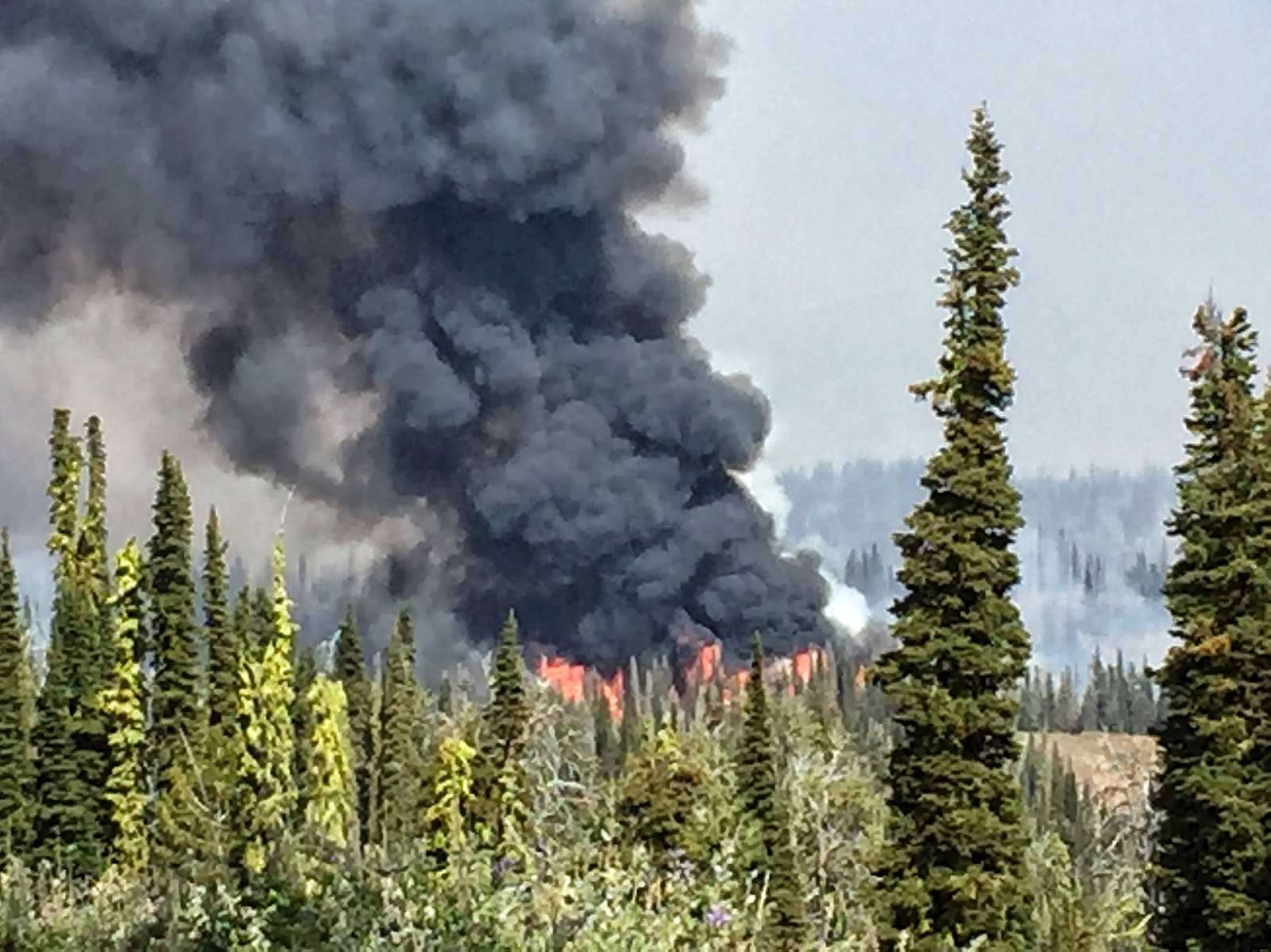
Chasing wildfires has certainly enabled Vincent to see the country, albeit in a different manner than the visiting tourists he usually encounters at the upscale Lake Placid resort where he’s employed.
Once on site, accommodations are not quite AAA Four Diamond. Crews sleep in tents in close proximity to the forest fire, in an area that’s been deemed safe. A compound is created with food trucks and port-o-johns.
This has been the lifestyle with his deployments over the years in Montana, Washington, California, West Virginia, Tennessee, Oregon and Minnesota. Closer to home, he’s even battled fires in western New York.
“The worst I’ve seen was in Weed, Calif. near the Oregon border,” recalled Vincent. “The devastation of it and the homes lost really stood out.”
Those who follow such stories from the comfort of their living rooms shake their heads and hope the effect doesn’t waft to the east and make their lives uncomfortable. But there are varied stories behind the loss of thousands of acres.
“Dry conditions throughout the year and dry lightning generally cause these fires,” continued Vincent. “But there are also irresponsible campers and hikers that create problems and make me scratch my head. The next thing you know, a town is gone.”
Vincent usually gets the call when the problem erupts and help is needed. That’s when he drops everything else and mobilizes. Matt has 24 hours to leave home, drive to Albany and fly to Montana where the company’s truck is stored. From there, he has another 24 hours to drive the vehicle and be on site with the rest of the crew.
On his last junket, Matt arrived in Hayfork, Calif. on July 6 in 116-degree heat, the start of a two-week mission. After a few days off and traveling, he spent the next 11 days in the Hood River Valley in Oregon.
That brought him back to the Mirror Lake Inn on Aug. 11 waiting on information about the next wildfires. Currently, he says, on a scale of one to five, the preparedness level is down to four out there. Which means that the next call could come at any time. If he had to take a guess, he told us, it would most likely see him returning to Idaho or Washington.
While Vincent waits, he’s part of another team – this one addresses any maintenance issues that might arise at the hotel. On occasion, he’ll cross paths with the Weibrecht family, owners of the Inn, who wholeheartedly support him.
“They’ve all come up to me – Ed, Lisa, Andrew and Denja – and thanked me. They are very supportive of me doing what I do as well as my boss, Aaron Karpp.”
Between stints as engine boss, Matt finds time for continuing education in firefighting. Recently, he has taken classes at nearby Paul Smith’s College in wildland fire, then continued with a state class at Brookhaven, Long Island as well as sessions offered by a private entity at Albany Pine Bush Preserve.
“I’m very thankful to the N.Y.S. Department of Environmental Conservation for seeing enough in me to continue my knowledge in this work and continue what I’m doing.
“The (firefighting) experiences the state brings back are huge. It’s very beneficial to New York.”
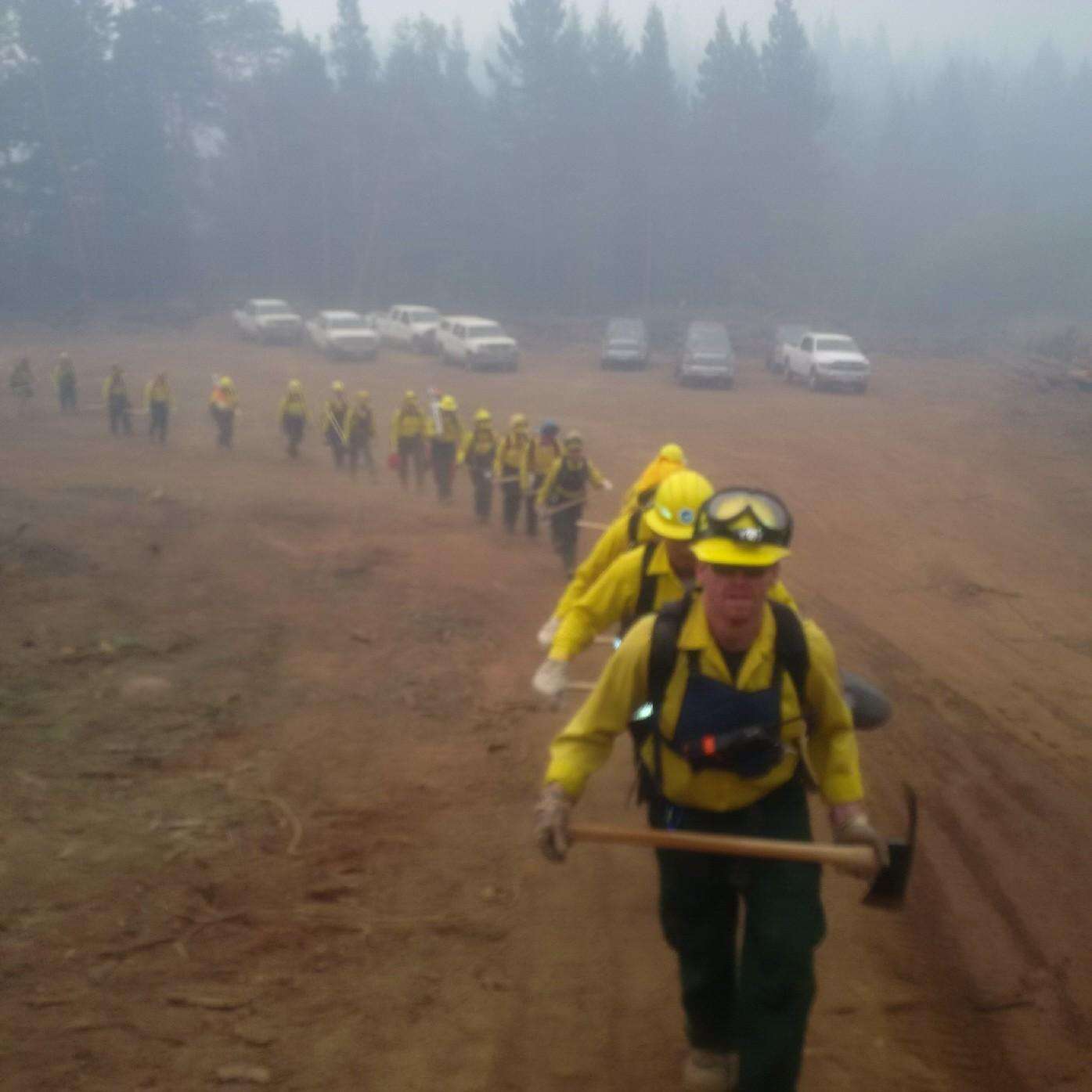
When Vincent is in the heat of battle, the objective is to try and control a blaze that can move very quickly and is difficult to contain. But the level of learning that he brings back is immeasurable. Like many problems, sometimes it’s best to step back and take the long view.
“It’s a great experience,” he said. “I wish everybody in fire service could see this. When you see larger scale fires, you get a better handle on how deal with fires. And dealing with life as well. We’re just trying to mitigate the problems.”