Lake Placid – When skiers and riders think of the first snowmaking guns and surface lifts in the United States, how many would recall Dream Hill in Lake Placid? In fact, would they even know that Dream Hill existed on the grounds of the Mirror Lake Inn and dated back to the 1940s?
This Upstate New York resort has hosted lovers of snow sports for over 100 years, including the 1932 Norwegian Olympic Nordic ski team.

In those formative years, a snow-covered hill existed behind the Inn, starting on what is now Norton Road. It brought skiers through the section of the property now occupied by the Mountain View Building. The ski run terminated on the lawn where a fire pit is currently located above Mirror Lake Drive.
Dream Hill offered a rudimentary snowmaking system and transport lift, features that are commonplace currently but were unheard of back in the day. But it was so creatively done in the 1940s and 1950s that the New York Times included the site in its weekly reporting of ski conditions.
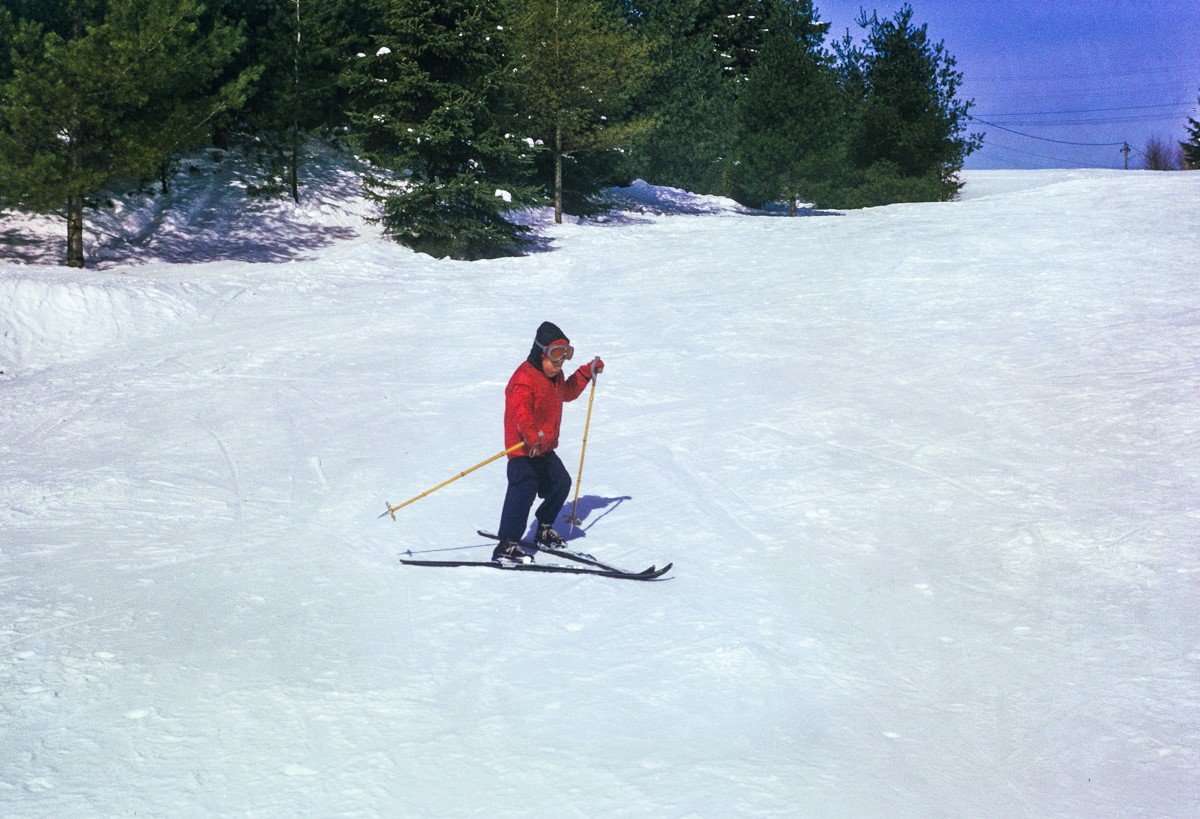
The Wikoff family, original owners of the Mirror Lake Inn, were early ski innovators in the Adirondacks. One of the sons, Jack Wikoff, served in the 10th Mountain Division. He was a ski instructor who actually gave Dream Hill its name, according to younger brother Dean, who also introduced neophyte skiers to this wonderful sport.
Such was its growing popularity that the Wikoff family allowed guests from other hotels to enjoy Dream Hill.
Getting skiers to the “summit” of Dream Hill
“Jack, with the help of the maintenance crew at the Inn, erected a ski tow that would enable skiers to get to the top,” wrote Dean Wikoff in 2004. It was a rope tow that wore out many pairs of gloves.
One of the interesting developments in this “technology” came unwittingly from the telephone company. Dean told the story that Ma Bell wanted to erect some poles on Dream Hill to service nearby homes. When that occurred, the hotel placed tire rims on the poles to hold the rope in place. But the telephone company objected, saying this was not allowed. Dean wrote that the hotel was undaunted.
“When we asked them to remove the poles, they quickly gave permission for the rims.” In fact, one of those poles, still holding a Dream Hill pulley, can still be seen in the Mountain View parking lot.
But the lift was just part of the battle. Now the question was: how do we power the tow?
In an idea that was short-lived, the uphill push for this transportation system initially came from a shed at the bottom of the hill which held an old Ford motor, according to Dean. However, the use of gasoline didn’t work out on cold mornings – it was just too difficult to crank up. So that was replaced by an electric motor at the top of Dream Hill, which worked much better and created more room at the base when the gas motor was removed.
Now for the snowmaking
“We purchased aluminum piping and snowmaking nozzles,” stated Dean. The Inn bought a noisy Ingersoll compressor engine from Army surplus. This powered the rope tow and enabled a few hours of snowmaking to take place each night.
All of this allowed the hotel to enhance its ski experience to the point where flood lights were added to the poles, thus the advent of night skiing on Dream Hill.
“This was a big success and our guests loved it,” remarked Dean, who guesstimated that he taught several thousand ski enthusiasts, and then turned them over to bigger hills.
Taking its place in Lake Placid ski history
Over many decades, Lake Placid has seen its share of local alpine ski hills. The Town of North Elba operated Scott’s Cobble which rose from the fifth fairway of the Craig Wood Golf Course. That ceased to exist in the 1970s but observers can still see vestiges of its slopes.
The community also offered skiing at Fawn Ridge where many children were introduced to the sport. Fawn Ridge is now a large parcel for upscale home development.
At the Lake Placid Club, Mount Whitney, still visible from the summit of Little Whiteface, welcomed club guests and local skiers. The Arena Grill Cup was contested annually there at the end of the season.
At the top of this list, however, stood Dream Hill. It was not only an attraction for visitors, but due to the foresight of the hotel’s founding family, the Wikoffs introduced the early versions of today’s technology to the ski industry.
(Dream Hill images provided by David Rihm with digital scans by Nancie Battaglia)